# The loop that speeds itself up
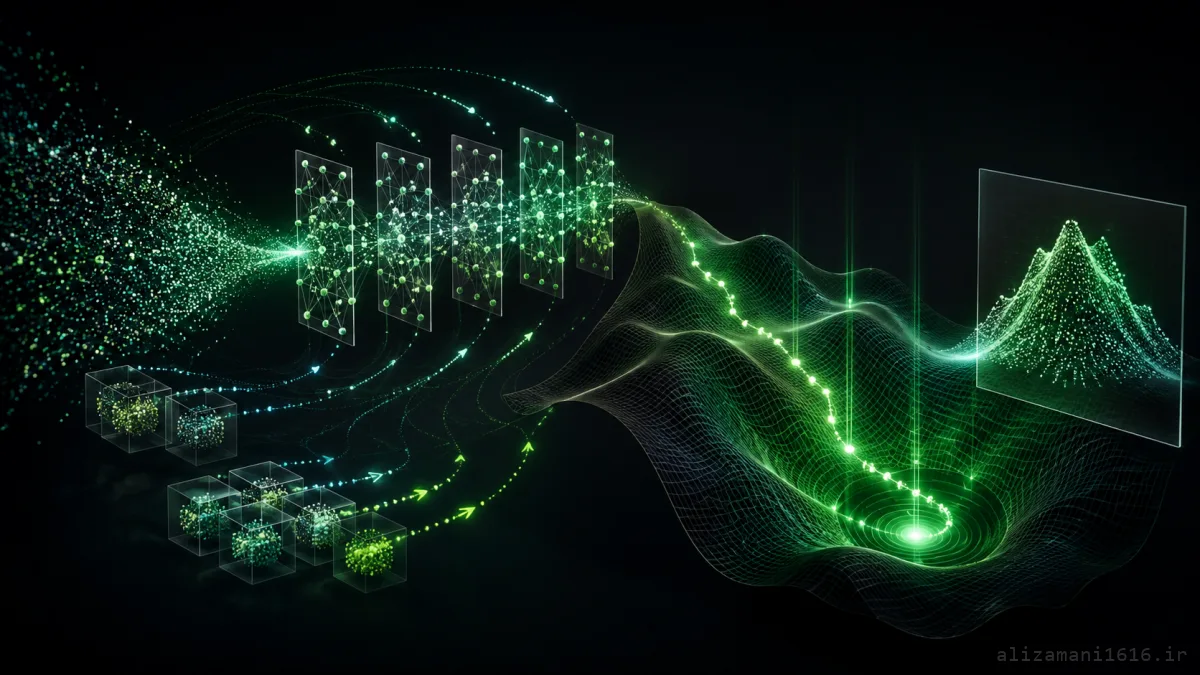
The idea looks simple, but its consequence is strange. We usually predict the future by looking at the past — but if the speed of change itself is changing, the past is no longer a good model for the future:
acceleration_loop.txt
This is where the concept of the Singularity enters. But here's the interesting part: the Singularity was originally not an AI concept at all.
# A "point" that makes the future unknowable
In 1958, Stanislaw Ulam wrote in a note about John von Neumann of a conversation concerning "the ever accelerating progress of technology and changes in the mode of human life" — the idea that technological growth could reach a point where the future can no longer be predicted by previous methods. This is one of the first famous references to what later became known as the "technological singularity."
timeline.txt
1958
Ulam writes about von Neumann on accelerating tech1965
I. J. Good proposes the "intelligence explosion"1993
Vernor Vinge: The Coming Technological Singularity2005
Ray Kurzweil takes the concept mainstream# Note: in 1958 this idea was not AI-centric yet — the subject was the acceleration of change.
In this view, the Singularity had no direct connection to artificial intelligence yet. The subject was the acceleration of change.
# Why is it called a "Singularity"?
The word comes from mathematics and physics. In math, a singularity is a point where a function's behavior can no longer be described by the ordinary rules that work for surrounding points:
singularity.py — python3
def f(x):
return 1 / x
print(f(1)) # 1.0 — fine
print(f(0.1)) # 10.0 — fine
print(f(0.001)) # 1000.0 — growing fast
print(f(0)) # ← singularity: the rule breaks down here
✗ ZeroDivisionError: division by zero
In the technology discussion we're not literally facing a "mathematical point." The metaphor: before a certain point we can somewhat follow the trend; after it, our ordinary tools for predicting the future are no longer enough. So the Singularity is better understood as a conceptual boundary — not a specific date on the calendar.
# Then AI entered the story
A few years later, an idea changed the story's path. In 1965, I. J. Good wrote about a machine that could surpass the intellectual activities of the smartest humans. But the more important part of his argument was something else: if such a machine could design machines better than itself, the next version would no longer be designed by humans.
intelligence_explosion.txt
This is where the concept of the Intelligence Explosion appears: a situation where improving machine intelligence itself becomes the engine of further improvements. And this was exactly the bridge that later connected the Singularity to artificial intelligence.
# The Singularity is not the same as AGI
These two concepts get mixed up a lot. AGI is a system with general capability across a wide range of intellectual tasks — closer to the flexibility of the human mind (we covered it in depth in the previous article). But the Singularity is a larger situation or scenario in which the speed of technological change may exceed our ability to predict it:
| AGI | Singularity | |
|---|---|---|
| What? | a system / capability | a situation / scenario |
| Scale | a technical milestone | a historic-world event |
| Definable? | roughly (3 axes) | inherently vague, debated |
| Relation | required for singularity? | possible without AGI? |
So we can imagine a chain like this — but that question mark matters:
chain.txt
Because there is no guarantee this chain necessarily continues to a Singularity. AGI might be built but its self-improvement stays limited. We might have extremely powerful systems while technological progress remains controllable and predictable. And it's even possible that what we call the "Singularity" today never happens the way we imagine it.
# Vernor Vinge and the birth of the modern picture
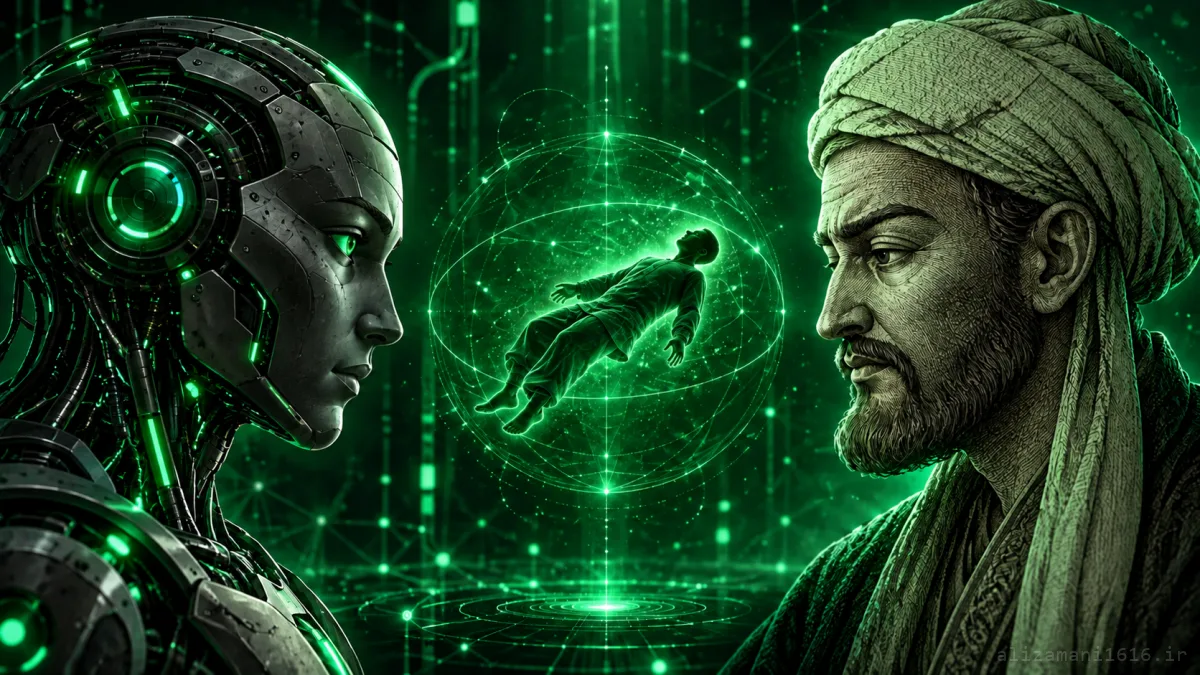
In 1993, author and mathematician Vernor Vinge, in his famous essay The Coming Technological Singularity, tied the concept explicitly to the emergence of greater-than-human intelligence. In his view, building entities smarter than humans could be the point after which changes happen so fast that human civilization can no longer predict the future in the usual way:
vinge_chain.txt
So what most people picture today when they hear "Singularity" is actually the AI-centric version of an older idea about technological acceleration.
# Does the Singularity mean human extinction?
No. That possibility is one of the scenarios discussed, but the concept of the Singularity itself doesn't mean "the destruction of humanity." At least three distinct scenarios can be imagined:
scenarios.txt
✓ Scenario 1 — positive leap
AI → faster research → new materials → better drugs → cheaper energy → advanced robotics → new tech
✗ Scenario 2 — loss of control
systems that can no longer be steered
⚠ Scenario 3 — limited explosion
rapid progress, but physical / economic / computational limits prevent an "unlimited explosion"
So when someone says "the Singularity means the day AI destroys humanity," they've equated one particular scenario with the entire concept.
So what's actually scary?
Strangely, the core issue isn't necessarily machines getting smarter. The issue is that a machine could take part in building the next machine. Today we design a model, train it, test it, and build the next version. But in a completely different scenario:
who_designs_whom.txt
# Today:
Human
── designs ──→
AI
# The scenario that changes everything:
AI
→
better AI
→
much better AI
→
?
# the improvement loop is no longer human-driven
In that case, the improvement loop is no longer driven only by humans — and that's exactly where the old idea of "technological acceleration" turns into a much more serious problem.
Maybe technology has a ceiling too
In nature, growth doesn't continue to infinity. You can't farm a single field with a single crop without limit and expect the same yield forever; soil nutrients run out, pests and diseases can spread, and monoculture itself makes the system fragile. That's why agriculture relies on crop diversity and mixing species for stability.
This raises an interesting question about technology: could technological growth hit a similar limit? Possibly. Compute resources, energy, raw materials, experiment speed, physical constraints — or even the complexity of the problems themselves — might block a particular path. In that case, "more and bigger versions of the same technology" may not be enough to get past a limit.
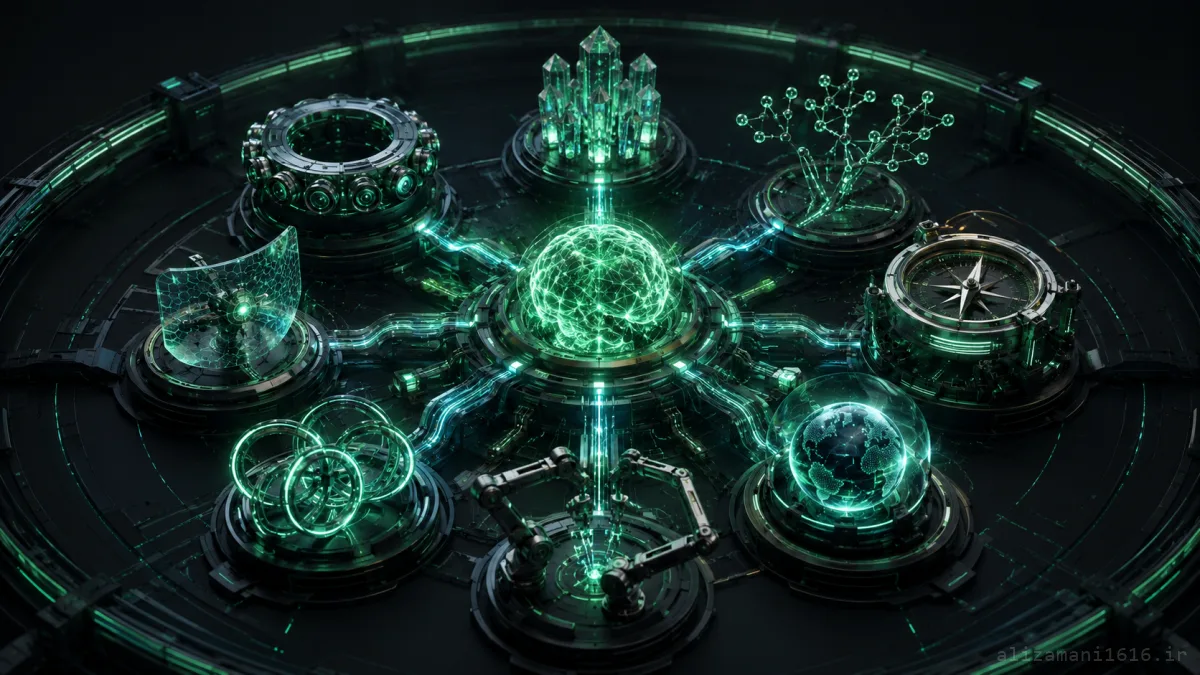
Just as a stable ecosystem doesn't depend on a single species, maybe the future of civilization needs a mix of different technologies to keep growing:
crossing_limits.txt
AI
+
robotics
+
energy
+
biotech
+
new materials
+
computing
↓ crossing the limit
AI growth might hit a ceiling, but better robotics provides new data and experiments. A computational limit might emerge, but new hardware moves it. Energy might become the bottleneck, but cheaper energy tech opens it again. In this view, the Singularity might be the result not of one technology's infinite growth, but of a combination of technologies that move each other's limits.
And here an even more interesting question appears: does civilization, like an ecosystem, need diversity to keep growing?
# Are we on the path to the Singularity right now?
This question is harder than defining the Singularity itself. We have systems that have become very powerful at some intellectual activities — AI genuinely participates in parts of research, coding, and design today. But between "a very capable model" and "a system that can continuously and independently improve its own next generations," a big gap remains:
the_gap.txt
✓ models that are very strong at many intellectual tasks
✓ AI that helps with parts of research & development
✓ automated improvement of some pipeline parts (limited AutoML)
✗ an independent system steering its whole improvement loop
✗ uncontrolled recursive leaps in capability
# "The Singularity happens in year X" → a prediction, not an established scientific fact.
That's why saying "the Singularity will happen in a specific year" is more a prediction than an established scientific fact. Even its possible timing is seriously disputed. But the question itself remains important.
# Maybe the Singularity isn't a "moment"
Perhaps the biggest misunderstanding about the Singularity is thinking we'll wake up one specific day and suddenly be inside it. Reality may be far more gradual — several technologies slowly increasing the pace of progress together:
convergence.txt
AI
+
robotics
+
computing
+
biotech
+
automation
+
simulation
+
energy
= a sum no longer explainable by any single technology
takeaway.txt
If one day the speed of change exceeds the speed of our understanding,
do we still get to decide the path of the future ourselves?
do we still get to decide the path of the future ourselves?